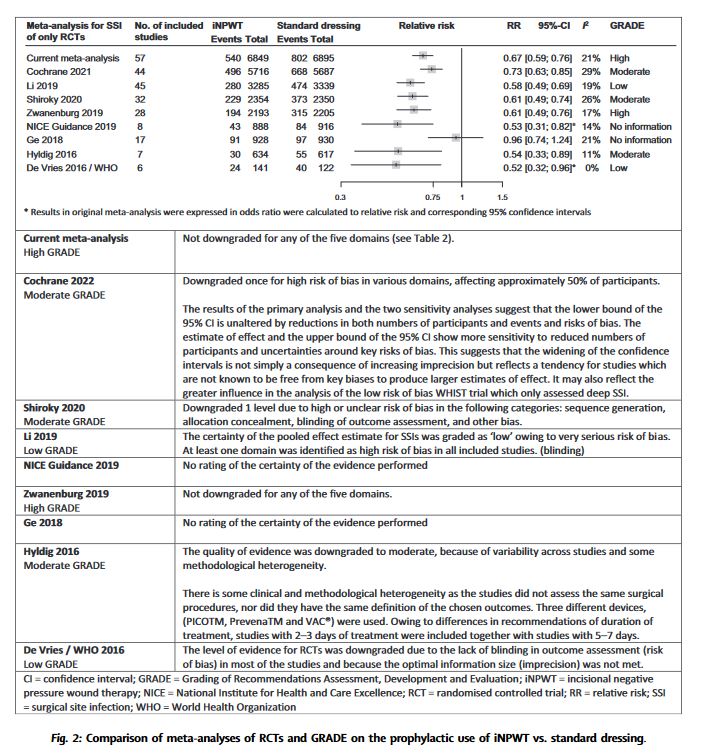
Incisional negative pressure wound therapy for the prevention of surgical site infection

“The evidence on prophylactic use of negative pressure wound therapy on primary closed incisional wounds (iNPWT) for the prevention of surgical site infections (SSI) is confusing and ambiguous. Implementation in daily practice is impaired by inconsistent recommendations in current international guidelines and published meta-analyses. More recently, multiple new randomised controlled trials (RCTs) have been published. This study aimed to provide an overview of all meta-analyses and their characteristics; to conduct a new and up-to-date systematic review and meta-analysis and Grading of Recommendations Assessment, Development and Evaluation (GRADE) assessment; and to explore the additive value of new RCTs with a trial sequential analysis (TSA).”

Continue reading

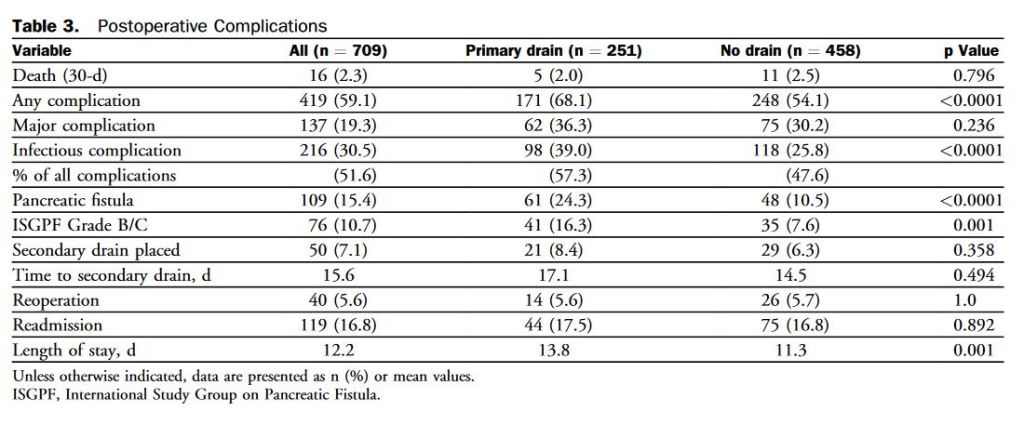
Is it time to abandon routine operative drain use?

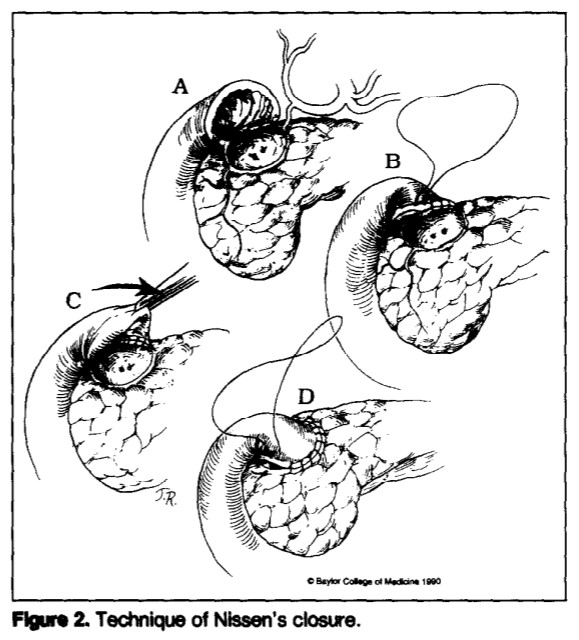
“Postoperative pancreatic fistula (POPF) is a potentially devastating complication after pancreatic resection, seen in 5% to 30% of patients. Depending on severity, POPF may be associated with infectious complications, reoperation, increased length of hospital stay, readmission, and even death. Historically, surgeons placed drains routinely for many abdominal procedures to control potential leaks from various anastomoses. However, this practice has been abandoned by many surgeons over the last 2 decades because no benefit to routine abdominal drainage has been observed from several randomized controlled trials for resections of the colon and rectum, gallbladder, and liver.”

Continue reading

The STITCH Trial. Small bites versus large bites for closure of abdominal midline incisions.

“Incisional hernia is a frequent complication of abdominal operations with an incidence of 10–23%, which can increase to 38% in specific risk groups. In the USA 4 million to 5 million laparotomies are done annually, suggesting that at least 400 000–500 000 incisional hernias can be expected to occur every year. Incisional hernia is associated with pain and discomfort, resulting in a decreased quality of life. Moreover, incarceration and strangulation of abdominal contents can take place, for which emergency surgery is indicated, with associated morbidity and mortality. About 348 000 operations for incisional hernia are done every year in the USA with US$3·2 billion in annual associated costs. Prevention of
incisional hernia is therefore of paramount importance.”

Continue reading

Cardiopulmonary resuscitation and outcomes with in-hospital cardiac arrest

“In-hospital cardiac arrest is an important public health problem, affecting approximately 300 000 adults annually in the United States, with a high mortality rate.1 2 The survival rate after in-hospital cardiac arrest in the US improved from 2000 to 2010 and has remained plateaued after 2010, with approximately 25% of patients surviving to hospital discharge.
Achieving return of spontaneous circulation is the first step toward long term survival and favorable functional recovery. However, for nearly half of patients with in-hospital cardiac arrest, resuscitative efforts are terminated without achievement of return
of spontaneous circulation.”

Continue reading

Hypoglycemia associated with renal failure

“Hypoglycemia associated with renal failure is more common than generally thought. Its occurrence is often a marker of multisystem failure and has an ominous prognostic implication. Its pathogenesis is frequently complex and involves one or several mechanisms. In the evaluation of uremic hypoglycemia, the first step should be the exclusion of obvious causes such as insulin, oral hypoglycemic agent therapy, and the use of drugs known to cause hypoglycemia. Propranolol, salicylates, and disopyramide are among the most commonly implicated agents.”

Continue reading

The role of CT in decision for acute appendicitis treatment

“Although medical treatment has proven to be a successful method of treatment of uncomplicated acute appendicitis, there is still controversy over which treatment to apply. It is intended that the computed tomography (CT) appendicitis score, which carries the information of all CT parameters, gives us an idea about the severity of acute appendicitis, such as the Alvarado score.”

“A retrospective analysis was conducted on 138 patients with acute appendicitis who underwent CT between 2015 and 2019. In this study, medical treatment group (n = 60) versus surgical treatment group (n = 78) and successful antibiotic treatment group (n = 23) versus unsuccessful antibiotic treatment group (n = 14) were compared.”

Continue reading

Article of interest: A randomized trial comparing antibiotics with appendectomy for appendicitis

CODA Collaborative, Flum DR, Davidson GH, et al. A Randomized Trial Comparing Antibiotics with Appendectomy for Appendicitis. N Engl J Med. 2020 Nov 12;383(20): 1907-1919.

Full-text for Emory users.

Figure 2. Cumulative Incidence of Appendectomy in the Antibiotics Group. Plus signs indicate censoring because the participant withdrew or was lost to follow-up.

Background: Antibiotic therapy has been proposed as an alternative to surgery for the treatment of appendicitis.

Methods: We conducted a pragmatic, nonblinded, noninferiority, randomized trial comparing antibiotic therapy (10-day course) with appendectomy in patients with appendicitis at 25 U.S. centers. The primary outcome was 30-day health status, as assessed with the European Quality of Life-5 Dimensions (EQ-5D) questionnaire (scores range from 0 to 1, with higher scores indicating better health status; noninferiority margin, 0.05 points). Secondary outcomes included appendectomy in the antibiotics group and complications through 90 days; analyses were prespecified in subgroups defined according to the presence or absence of an appendicolith.

Continue reading