Periprocedural bridging anticoagulation

Rechenmacher SJ, Fang JC. Bridging Anticoagulation: Primum Non Nocere. J Am Coll Cardiol. 2015 Sep 22;66(12):1392-403.

Full-text for Emory users.

Conclusions: Periprocedural anticoagulation management is a common clinical dilemma with limited evidence (but 1 notable randomized trial) to guide our practices. Although bridging anticoagulation may be necessary for those patients at highest risk for TE, for most patients it produces excessive bleeding, longer length of hospital stay, and other significant morbidities, while providing no clear prevention of TE. Unfortunately, contemporary clinical practice, as noted in physician surveys, continues to favor interruption of OAC and the use of bridging anticoagulation. While awaiting the results of additional randomized trials, physicians should carefully reconsider the practice of routine bridging and whether periprocedural anticoagulation interruption is even necessary.

Central Illustration. Bridging Anticoagulation: Algorithms for Periprocedural Interrupting and Bridging Anticoagulation. Decision trees for periprocedural interruption of chronic oral anticoagulation (top) and for periprocedural bridging anticoagulation (bottom). OAC = oral anticoagulation.

Continue reading

Management of anticoagulation in patients with mechanical heart valves undergoing noncardiac surgical procedures

“Although the American Heart Association (AHA) and American College of Cardiology (ACC) and the American College of Chest Physicians (ACCP) provide guidelines on anticoagulation for patients with MHVs, limited guidance is provided for bridging anticoagulation 2,3 The guidelines are focused on preoperative bridging, with virtually no guidance on postoperative bridging.”

Continue reading

Histological Margin Positivity in the Prediction of Recurrence After Crohn’s Resection

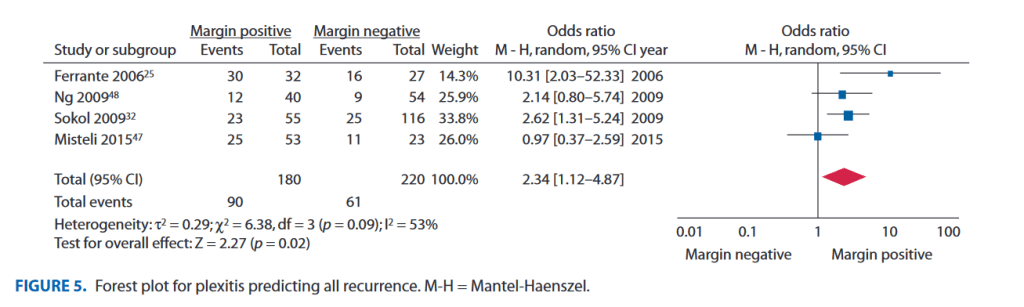
The presence of involved histological margins at the time of index resection in Crohn’s disease is associated with recurrence, and plexitis shows promise as a marker of more aggressive disease. Further studies with homogeneity of histopathological and recurrence reporting are required.“”The presence of involved histological margins at the time of index resection in Crohn’s disease is associated with recurrence, and plexitis shows promise as a marker of more aggressive disease. Further studies with homogeneity of histopathological and recurrence reporting are required.

Continue reading

Optimev study. Clinical presentation and mortality in pulmonary embolism

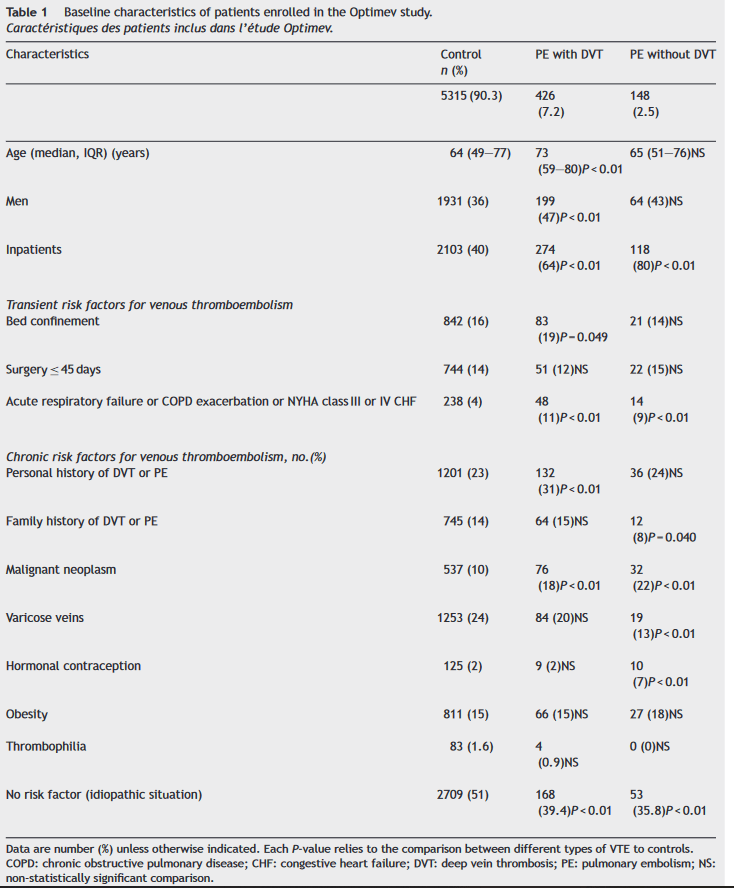
“Venous thromboembolism (VTE), including deep vein thrombosis (DVT) and pulmonary embolism (PE), is a common clinical problem associated with significant mortality and life-long morbidity among hospitalized patients and outpatients. The diagnosis of VTE is challenging because of the non specific signs and symptoms of this disease.”

“The aim of this study was to investigate the clinical presentation and 3-month mortality associated with some forms of VTE: PE with DVT, and PE without DVT.”

Continue reading

Sugammadex and anaphylaxis

“Anaphylaxis is described as a severe, life‑threatening, generalized or systemic hypersensitivity reaction. It occurs rarely during surgery and anesthesia but neuromuscular blocking agents, non‑steroidal anti‑inflammatory drugs (NSAIDs), and antibiotics are considered common causes of anaphylaxis”

“Sugammadex is a synthetic modified gamma‑cyclodextrin derivative first designed to selectively bind to the steroidal neuromuscular blocking agent molecule to provide rapid recovery of neuromuscular function. Sugammadex is extensively used for reversing the effects of rocuronium and to a lesser extent, vecuronium.”

Continue reading