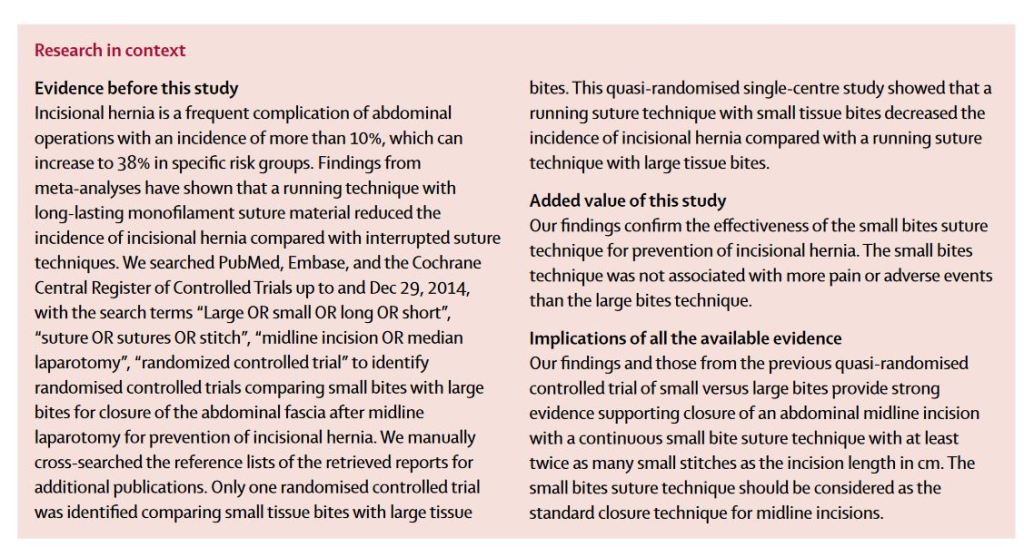
The STITCH Trial. Small bites versus large bites for closure of abdominal midline incisions.

“Incisional hernia is a frequent complication of abdominal operations with an incidence of 10–23%, which can increase to 38% in specific risk groups. In the USA 4 million to 5 million laparotomies are done annually, suggesting that at least 400 000–500 000 incisional hernias can be expected to occur every year. Incisional hernia is associated with pain and discomfort, resulting in a decreased quality of life. Moreover, incarceration and strangulation of abdominal contents can take place, for which emergency surgery is indicated, with associated morbidity and mortality. About 348 000 operations for incisional hernia are done every year in the USA with US$3·2 billion in annual associated costs. Prevention of
incisional hernia is therefore of paramount importance.”

Continue reading

Post-op GI bleed after Frey procedure for chronic pancreatitis. 

“Chronic pancreatitis (CP) is a progressive fibro-inflammatory disease of the pancreas leading to irreversible parenchymal damage with gradual loss of exocrine and endocrine functions. The most common and debilitating manifestation of this disease is intractable pain which may lead to loss of work, unemployment, narcotic dependence, and impairment of the quality of life (QOL). About 30–50% of patients with CP will require surgery during their life time.2,3 Several surgical procedures have been described in the literature, and these are broadly classified as drainage, resectional or a combination of the two. Each respective
procedure is chosen based on the degree of pancreatic ductal dilatation, glandular morphology, local complications, and to some extent on the experience and preference of the surgeon. The Frey procedure (FP) has emerged over the past 30 years as one of the most commonly performed operations for painful CP associated with enlarged pancreatic head. The procedure results in substantial and sustained pain relief in the majority of patients. Like other major operations, FP also is associated with several post operative complications.”

Continue reading

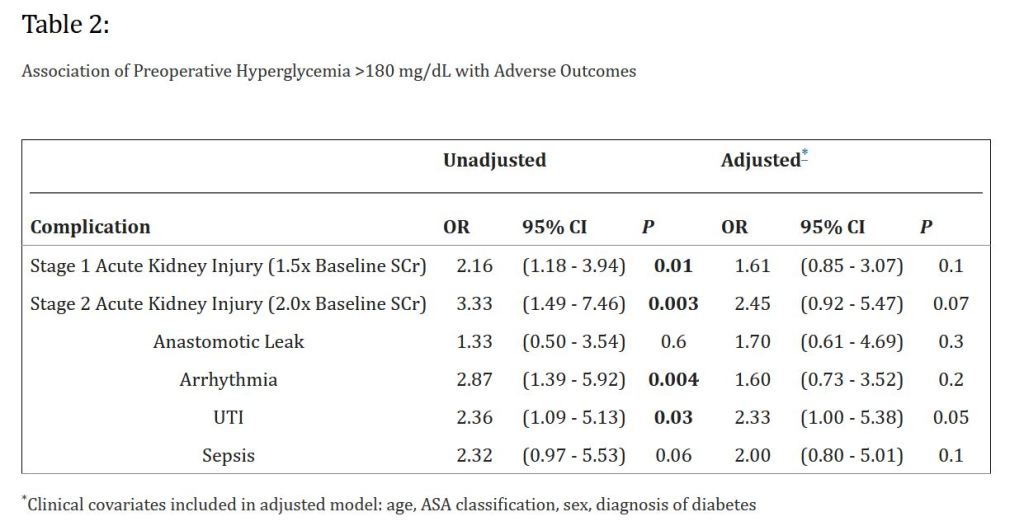
Pre versus post operative hyperglycemia as a risk for complications

“Hyperglycemia has emerged as a modifiable mediator of adverse events after surgery. Potential mechanisms for these outcomes include the vascular, inflammatory, and hemodynamic derangements that occur as a result of persistently elevated glucose levels, all of which can contribute to the risk of morbidity and mortality after surgery.” (Chen)

“Postoperative hyperglycemia was more significantly associated with adverse clinical outcomes after elective colorectal surgery than was preoperative hyperglycemia. However, preoperative hyperglycemia was associated with postoperative hyperglycemia, suggesting that improved glycemic management preoperatively may help reduce hyperglycemic events after surgery.” (Chen)

Chen
Continue reading

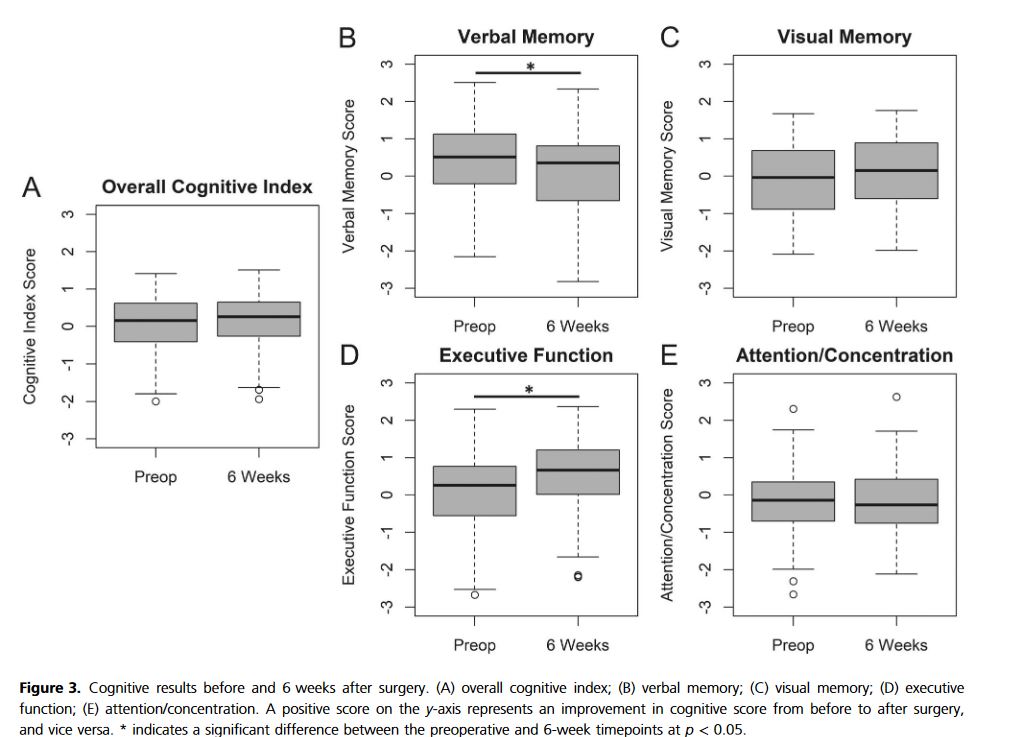
Evaluation of pre- and post- operative cognitive function and neurodegenerative markers

“One of the largest controversies in perioperative medicine over the last quarter century has been whether anesthesia and surgery contribute to long-term cognitive decline and/or the development of dementia in older adults. This question has major public health implications, since approximately half of adults over 65 will undergo at least one surgery, and over 120,000 Americans will die of Alzheimer’s disease (AD) per year.”

“Neurocognitive changes after non-cardiac, non-neurologic surgery in the majority of cognitively healthy, community-dwelling older adults are unlikely to be related to postoperative changes in AD neuropathology (as assessed by CSF Aβ, tau or p-tau-181p levels or the p-tau-181p/Aβor tau/Aβratios).”

Continue reading

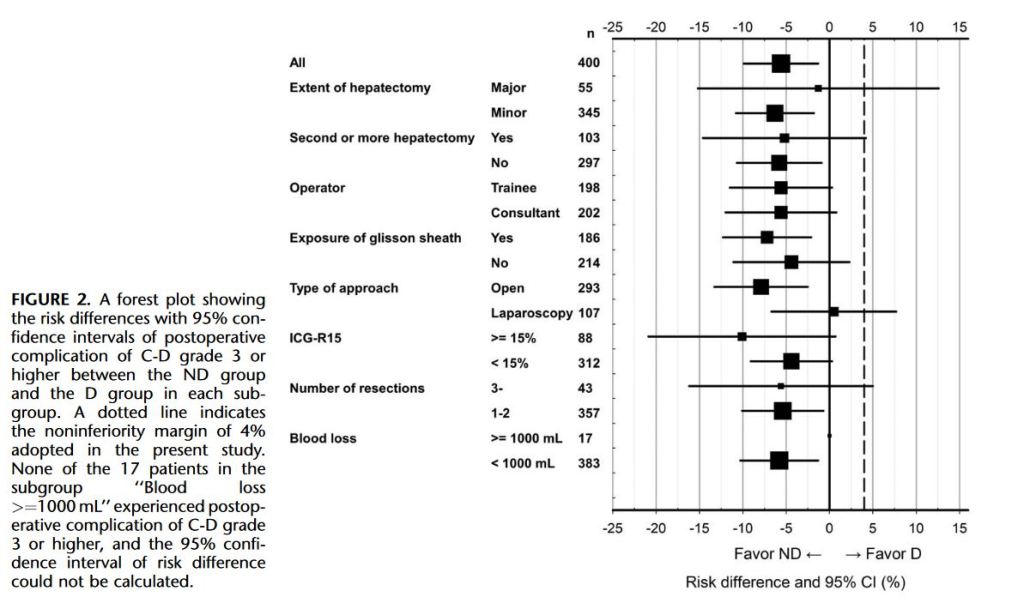
Drain Placement After Uncomplicated Hepatic Resection Increases Severe Postoperative Complication Rate

“Advances in surgical techniques and perioperative management over the last 2–3 decades have enabled the safe performance of hepatic resections. In the 1980s, when the perioperative mortality was reported to be as high as around 10%, drain placement was
considered to be necessary so as to provide information about intraabdominal adverse events promptly and for prophylactic drainage. However, as the necessity of drain placement in other surgical fields has been ruled out and as the incidence of life-threatening adverse
events after hepatic resection decreased, several randomized controlled trials (RCTs) were performed; the conclusions of these trials were that drain placement was not necessary. However, some of them lacked a primary endpoint and calculation of sample size; in
the other studies, the primary endpoint was the incidence of wound-related complication, most of which could be resolved using antibiotics or bed-side opening of the wound, corresponding to Clavien-Dindo (C-D) grade 11 2 or even 1.”

Continue reading

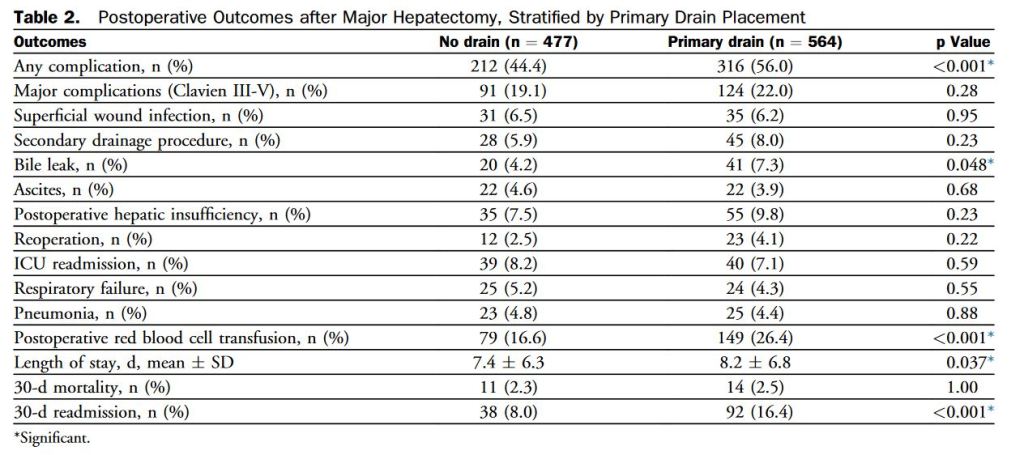
Value of primary operative drain placement after major hepatectomy

“Historically, prophylactic intraoperative peritoneal drain placement has been advocated after hepatectomy in order to identify and drain bile leaks and decrease the risk of potential perihepatic fluid collections and abscess formation postoperatively. Several small randomized trials have suggested, however, that routine abdominal drainage after elective liver resection may not be necessary.”

Continue reading

Postoperative atrial fibrillation: Predictors and risk of mortality

“Atrial fibrillation, the most common sustained dysrhythmia, is a common postoperative complication. Previous studies have shown that the incidence, prevalence, and associated morbidity and mortality increase progressively with age.
Development of POAF and mortality is dependent upon a wide range of factors not limited to age and medical comorbidities. Although a patient may be at an increased risk for POAF this does not mean they are at an increased risk for mortality.”

Continue reading