Sentinel lymph node surgery after neoadjuvant chemotherapy in node-positive breast cancer

Cavalcante FP, Millen EC, Zerwes FP, Novita GG. Role of Axillary Surgery After Neoadjuvant Chemotherapy. JCO Glob Oncol. 2020 Feb;6:238-241.

“In a US study, associating selective localization and removal of clipped nodes with SLN dissection, known as targeted axillary dissection, reduced false-negative rates to approximately 2% compared with 4% with removal of the clipped lymph node alone. [20] However, patients are required to undergo two procedures: placement of the clip before systemic treatment and marking it to identify the lymph node during surgery. A retrospective analysis showed that in patients with clipped lymph nodes who were referred for preoperative marking, the clip failed to be identified in 20% of those patients, even when computed tomography was used, with the additional risk of the clip not being removed during surgery. [21] Therefore, the use of clips is controversial, because it is sometimes impossible to remove the clip alone. Despite the association between the number of lymph nodes and false-negative rates, there are still no convincing data regarding clinical outcome.”


Caudle AS, Yang WT, Krishnamurthy S, et al. Improved Axillary Evaluation Following Neoadjuvant Therapy for Patients With Node-Positive Breast Cancer Using Selective Evaluation of Clipped Nodes: Implementation of Targeted Axillary Dissection. J Clin Oncol. 2016 Apr 1;34(10):1072-8.

Results: Of 208 patients enrolled in this study, 191 underwent ALND, with residual disease identified in 120 (63%). The clipped node revealed metastases in 115 patients, resulting in an FNR of 4.2% (95% CI, 1.4 to 9.5) for the clipped node. In patients undergoing SLND and ALND (n = 118), the FNR was 10.1% (95% CI, 4.2 to 19.8), which included seven false-negative events in 69 patients with residual disease. Adding evaluation of the clipped node reduced the FNR to 1.4% (95% CI, 0.03 to 7.3; P = .03). The clipped node was not retrieved as an SLN in 23% (31 of 134) of patients, including six with negative SLNs but metastasis in the clipped node. TAD followed by ALND was performed in 85 patients, with an FNR of 2.0% (1 of 50; 95% CI, 0.05 to 10.7).

Conclusion: Marking nodes with biopsy-confirmed metastatic disease allows for selective removal and improves pathologic evaluation for residual nodal disease after chemotherapy.

Continue reading

Total neoadjuvant therapy in rectal cancer

Petrelli F, et al. Total Neoadjuvant Therapy in Rectal Cancer: A Systematic Review and Meta-analysis of Treatment Outcomes. Ann Surg. 2020 Mar;271(3):440-448.

Full-text for Emory users.

Results: A total of 28 studies (3 retrospective and 25 prospective for a total of 3579 patients) were included in the final analysis (n = 2688 treated with TNT and n = 891 with neoadjuvant chemoradiotherapy therapy). The pooled pCR rate was 22.4% (95% CI 19.4%-25.7%) in all patients treated with TNT (n = 27 studies with data available). In n = 10 comparative studies with data available, TNT was found to increase the odds of pCR by 39% (1.40, 95% CI 1.08-1.81, P = 0.01).

Conclusions: The addition of induction or consolidation chemotherapy to standard neoadjuvant chemoradiotherapy results in a higher pCR rate. Given that the comparative analysis was derived from few randomized publications, large confirmatory trials should be carried out before a strong recommendation is made in favor of TNT.

Continue reading

Article of interest: The Landmark Series: MSLT-1, MSLT-2 and DeCOG (Management of Lymph Nodes)

Bello DM, Faries MB. The Landmark Series: MSLT-1, MSLT-2 and DeCOG (Management of Lymph Nodes). Ann Surg Oncol. 2020 Jan;27(1):15-21.

Full-text for Emory users.

Management of regional lymph nodes in patients with melanoma has evolved significantly in recent years. The value of nodal intervention, long utilized for its perceived therapeutic benefit, has now shifted to that of a critical prognostic procedure used to guide clinical decision making. This review focuses on the three landmark, randomized controlled trials evaluating the role of surgery for regional lymph nodes in melanoma: Multicenter Selective Lymphadenectomy Trial I (MSLT-I), German Dermatologic Cooperative Oncology Group-Selective Lymphadenectomy Trial (DeCOG-SLT), and Multicenter Selective Lymphadenectomy Trial II (MSLT-II).

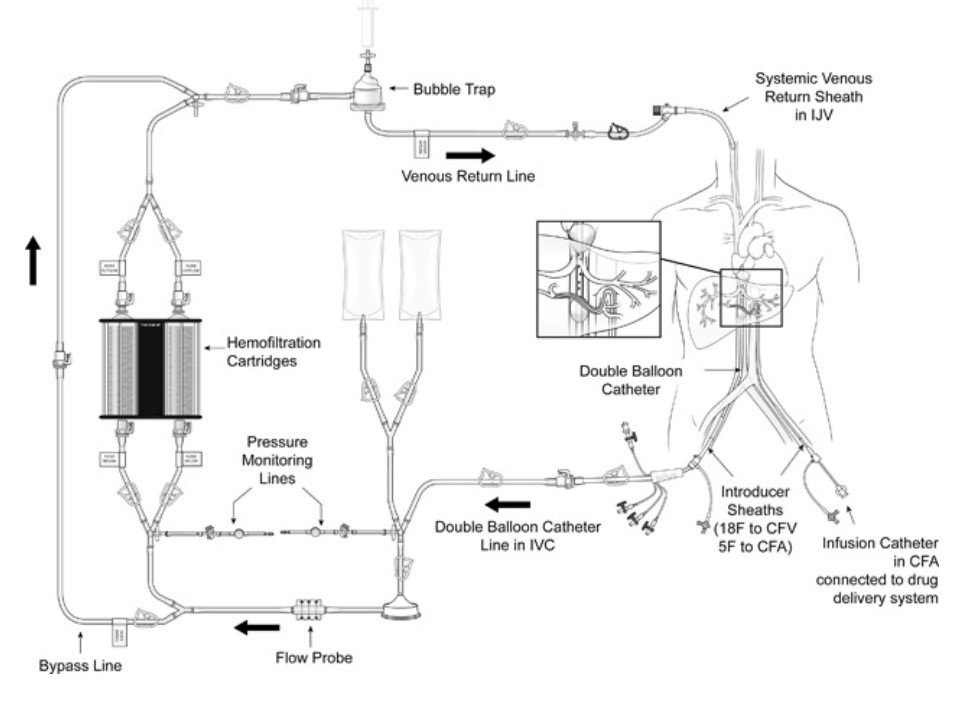
Percutaneous Hepatic Perfusion (PHP) with Melphalan

Karydis I, Gangi A, Wheater MJ, et al. Percutaneous hepatic perfusion with melphalan in uveal melanoma: A safe and effective treatment modality in an orphan disease. J Surg Oncol. 2018 May;117(6):1170-1178.

Figure 1. Melphalan percutaneous hepatic perfusion (M-PHP) circuit.

Click to enlarge.

Results: A total of 51 patients received 134 M‐PHP procedures (median of 2 M‐PHPs). 25 (49%) achieved a partial (N = 22, 43.1%) or complete hepatic response (N = 3, 5.9%). In 17 (33.3%) additional patients, the disease stabilized for at least 3 months, for a hepatic disease control rate of 82.4%. After median follow‐up of 367 days, median overall progression free (PFS) and hepatic progression free survival (hPFS) was 8.1 and 9.1 months, respectively and median overall survival was 15.3 months. There were no treatment related fatalities. Non‐hematologic grade 3‐4 events were seen in 19 (37.5%) patients and were mainly coagulopathic (N = 8) and cardiovascular (N = 9).

Continue reading

Pancreatic cystic neoplasms

Scholten L, et al. Pancreatic Cystic Neoplasms: Different Types, Different Management, New Guidelines. Visc Med. 2018 Jul;34(3):173-177.

Pancreatic cystic neoplasms (PCN) include different types of cysts with various biological behavior. The most prevalent PCN are intraductal papillary mucinous neoplasm (IPMN), mucinous cystic neoplasm (MCN), and serous cystic neoplasm (SCN). Management of PCN should focus on the prevention of malignant progression, while avoiding unnecessary morbidity of surgery. This requires specialized centers with dedicated multidisciplinary PCN teams. The malignant potential of PCN varies enormously between the various types of PCN. A combination of computed tomography, magnetic resonance imaging/magnetic resonance cholangiopancreatography, and endoscopic ultrasound with or without fine needle aspiration is typically needed before a reliable diagnosis can be made. Several guidelines discuss the management of PCN; however, most of these are non-evidence-based without clear consensus on the optimal treatment and follow-up strategy. The 2018 European guidelines on PCN are the first evidence-based guidelines to include IPMN, MCN, SCN, and all other PCN. This guideline advises a more conservative approach to side-branch IPMN and MCN smaller than 40 mm and more often a surgical approach in IPMN with a main duct dilatation beyond 5 mm. The goal of this review is to summarize the different types and management of the most common PCN based on the current literature and guidelines.

Continue reading

Surgical management of insulinomas

Andreassen M, Ilett E, Wiese D, et al. Surgical Management, Preoperative Tumor Localization, and Histopathology of 80 Patients Operated on for Insulinoma. J Clin Endocrinol Metab. 2019 Dec 1;104(12):6129-6138.

Full-text for Emory users.

Results: Eighty patients were included. Seven had a malignant tumor. A total of 312 diagnostic examinations were performed: endoscopic ultrasonography (EUS; n = 59; sensitivity, 70%), MRI (n = 33; sensitivity, 58%), CT (n = 55; sensitivity, 47%), transabdominal ultrasonography (US; n = 45; sensitivity, 40%), somatostatin receptor imaging (n = 17; sensitivity, 29%), 18F-fluorodeoxyglucose positron emission tomography/CT (n = 1; negative), percutaneous transhepatic venous sampling (n = 10; sensitivity, 90%), arterial stimulation venous sampling (n = 20; sensitivity, 65%), and intraoperative US (n = 72; sensitivity, 89%). Fourteen tumors could not be visualized. Invasive methods were used in 7 of these 14 patients and localized the tumor in all cases. Median tumor size was 15 mm (range, 7 to 80 mm). Tumors with malignant vs benign behavior showed less staining for insulin (3 of 7 vs 66 of 73; P = 0.015) and for proinsulin (3 of 6 vs 58 of 59; P < 0.001). Staining for glucagon was seen in 2 of 6 malignant tumors and in no benign tumors (P < 0.001). Forty-three insulinomas stained negative for somatostatin receptor subtype 2a.

Conclusion: Localization of insulinomas requires many different diagnostic procedures. Most tumors can be localized by conventional imaging, including EUS. For nonvisible tumors, invasive methods may be a useful diagnostic tool. Malignant tumors showed reduced staining for insulin and proinsulin and increased staining for glucagon.

Continue reading

Article of interest: Frailty and cancer: Implications for oncology surgery, medical oncology, and radiation oncology.

Ethun CG, Bilen MA, Jani AB, Maithel SK, Ogan K, Master VA. Frailty and cancer: Implications for oncology surgery, medical oncology, and radiation oncology. CA Cancer J Clin. 2017 Sep;67(5):362-377.

Free full-text. 

  • The concept of frailty has become increasingly recognized as one of the most important issues in health care and health outcomes and is of particular importance in patients with cancer who are undergoing surgery, chemotherapy,and radiotherapy. However, defining frailty can be challenging.
  • Frailty is a complex, multidimensional, and cyclical state of diminished physiologic reserve that results in decreased resiliency and adaptive capacity and increased vulnerability to stressors.
  • It has been demonstrated that frail patients are at increased risk of postoperative complications, chemotherapy intolerance, disease progression, and death. Although international standardization of frailty cutoff points is needed, continued efforts by oncology physicians and surgeons to identify frailty and promote multidisciplinary decision making will help to develop more individualized management strategies and optimize care for patients with cancer.

Continue reading