Laparoscopic cholecystectomy and cirrhosis

Gad EH, et al. Laparoscopic cholecystectomy in patients with liver cirrhosis: 8 years experience in a tertiary center. A retrospective cohort study. Ann Med Surg (Lond). 2020 Jan 15;51:1-10. Free full-text.

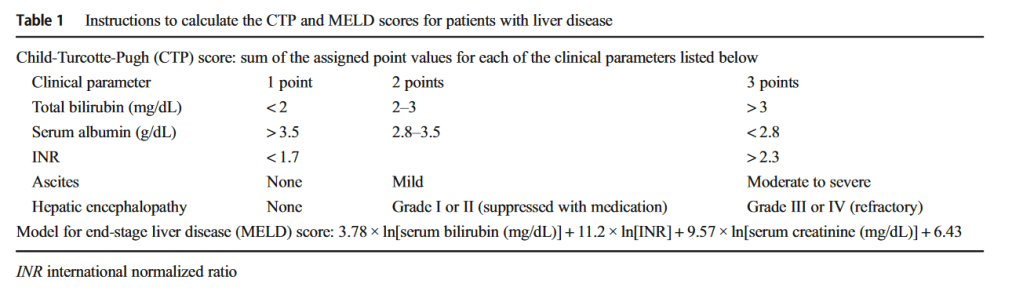
Results: The most frequent Child-Turcotte-Pugh (CTP) score was A, The most frequent cause of cirrhosis was hepatitis C virus (HCV), while biliary colic was the most frequent presentation. The harmonic device was used in 39.9% of patients, with a significant correlation between it and lower operative bleeding, lower blood and plasma transfusion rates, higher operative adhesions rates, lower conversion to open surgery and 30-day complication rates, shorter operative time and post-operative hospital stays where operative adhesions and times were independently correlated. The 30-day morbidity and mortality were 22.1% and 2.3% respectively while overall survival was 91.5%, higher CTP, and model for end-stage liver disease (MELD) scores, higher mean international normalization ratio (INR) value, lower mean platelet count, higher operative bleeding, higher blood, and plasma transfusion rates, longer mean operative time and postoperative hospital stays were significantly correlated with all conversion to open surgery, 30-day morbidities and mortalities.

Conclusion: LC can be safely performed in cirrhotic patients. However, higher CTP and MELD scores, operative bleeding, more blood and plasma transfusion units, longer operative time, lower platelet count, and higher INR values are predictors of poor outcome that can be improved by proper patient selection and meticulous peri-operative care and by using Harmonic scalpel shears.

Continue reading

Sickle Hepatopathy

Praharaj DL, Anand AC. Sickle Hepatopathy. J Clin Exp Hepatol. 2021 Jan-Feb; 11(1):82-96. Free full-text.

“Liver disease may result from viral hepatitis and iron overload due to multiple transfusions of blood products or due to disease activity causing varying changes in vasculature. The clinical spectrum of disease ranges from ischemic injury due to sickling of red blood cells in hepatic sinusoids, pigment gall stones, and acute/chronic sequestration syndromes. The sequestration syndromes are usually episodic and self-limiting requiring conservative management such as antibiotics and intravenous fluids or packed red cell transfusions. However, rarely these episodes may present with coagulopathy and encephalopathy like acute liver failure, which are life-threatening, requiring exchange transfusions or even liver transplantation.” (Praharaj DL, et al., p. 82)

Continue reading

High impact complications after Whipple procedure

Mirrielees JA, et al. Pancreatic Fistula and Delayed Gastric Emptying Are the Highest-Impact Complications After Whipple. J Surg Res. 2020 Jun;250:80-87.

Full-text for Emory users.

Results: About 10,922 patients undergoing pancreaticoduodenectomy were included for analysis. The most common postoperative complications were DGE (17.3%), POPF (10.1%), incisional SSI (10.0%), and organ/space SSI (6.2%). POPF and DGE were the only complications that demonstrated sizable effects for all clinical and resource utilization outcomes studied. Other complications had sizable effects for only a few of the outcomes or had small effects for all the outcomes.

Continue reading

Percutaneous-transhepatic-endoscopic rendezvous procedures are effective and safe in patients with refractory bile duct obstruction

Bokemeyer A, Müller F, Niesert H, et al. Percutaneous-transhepatic-endoscopic rendezvous procedures are effective and safe in patients with refractory bile duct obstruction. United European Gastroenterol J. 2019 Apr;7(3):397-404. Free full-text.

New findings:

  • Percutaneous-transhepatic-endoscopic rendezvous procedures (PTE-RVs) offer a high technical success rate (80%) in patients with a previously failed endoscopic retrograde cholangiography, including patients with an altered gastrointestinal tract.
  • Significantly fewer complications occur following PTE-RVs than following percutaneous transhepatic cholangiography (PTC) (16.6 vs 26.6%; p = 0.037); thus, PTE-RVs should be preferred over PTC alone in the case of a necessary percutaneous procedure for biliary interventions.
Continue reading

Post-Cholecystectomy Biliary Complications

Pesce A, et al. Iatrogenic bile duct injury: impact and management challenges. Clin Exp Gastroenterol. 2019 Mar 6;12:121-128. Free full-text.

“Iatrogenic BDIs represent a serious complication which can be brought on by cholecystectomy. The errors leading to laparoscopic bile duct lesions stem principally from misperception of the biliary anatomy. Any effort toward the reduction of the risk profile of everyday cholecystectomy is appreciated. The key points to successful treatment are characterized by early recognition, control of any intra-abdominal fluid collection and infection, nutritional balance, multidisciplinary approach, and surgical repair by an experienced surgeon in biliary reconstruction.”


Pekolj J, et al. Intraoperative management and repair of bile duct injuries sustained during 10,123 laparoscopic cholecystectomies in a high-volume referral center. J Am Coll Surg. 2013 May;216(5):894-901. Full-text for Emory users.

Results: Among 10,123 LC performed during the study period, 19 patients had a BDI sustained during the procedure. Intraoperative cholangiography was routinely used. Bile duct injury was diagnosed intraoperatively in 17 patients (89.4%). Mean age was 56.4 years (range 18 to 81 years) and 15 patients were women (88%). According to the Strasberg classification of BDI, there were 3 type C lesions, 12 type D lesions, and 2 type E2 lesions. There were no associated vascular injuries. Twelve cases (71%) were converted to open surgery. The repairs included 10 primary biliary closures, 4 Roux-en-Y hepaticojejunostomies, 2 end to end anastomosis, and 1 laparoscopic transpapillary drainage. Postoperative complications occurred in 5 patients (29.4%). During the follow-up period, early biliary strictures developed in 2 patients (11.7%) and were treated by percutaneous dilation and a Roux-en-Y hepaticojejunostomy with satisfactory long-term results.

Continue reading

Endoscopic retrograde cholangiopancreatography in patients with surgically altered anatomy

Shimatani M, et al. Recent advances of endoscopic retrograde cholangiopancreatography using balloon assisted endoscopy for pancreaticobiliary diseases in patients with surgically altered anatomy: Therapeutic strategy and management of difficult cases. Dig Endosc. 2021 Sep;33(6):912-923.

Free full-text.

Abstract: Endoscopic retrograde cholangiopancreatography (ERCP) is considered to be the gold standard for diagnosis and interventions in biliopancreatic diseases. However, ERCP in patients with surgically altered anatomy (SAA) appears to be more difficult compared to cases with normal anatomy. Since the production of a balloon enteroscope (BE) for small intestine disorders, BE had also been used for biliopancreatic diseases in patients with SAA. Since the development of BE-assisted ERCP, the outcomes of procedures, such as stone extraction or drainage, have been reported as favorable. Recently, an interventional endoscopic ultrasound (EUS), such as EUS-guided biliary drainage (EUS-BD), has been developed and is available mainly for patients with difficult cases of ERCP. It is a good option for patients with SAA. The effectiveness of interventional EUS for patients with SAA has been reported. Both BE-assisted ERCP and interventional EUS have advantages and disadvantages. The choice of procedure should be individualized to the patient’s condition or the expertise of the endoscopists. The aim of this review article is to discuss recent advances in interventional ERCP and EUS for patients with SAA.

Continue reading

Distal pancreatectomy with en bloc celiac axis resection (DP-CAR) and arterial reconstruction: Techniques and outcomes

Addeo P, Guerra M, Bachellier P. Distal pancreatectomy with en bloc celiac axis resection (DP-CAR) and arterial reconstruction: Techniques and outcomes. J Surg Oncol. 2021 Jun;123(7):1592-1598.

Full-text for Emory users.

Results: Sixty consecutive DP-CARs were reviewed. Most patients underwent induction chemotherapy (85%) based on FOLFIRINOX protocol (80.3%). The hepatic artery was reconstructed in 50 patients (83.3%). The left gastric artery was reconstructed in 4 and preserved in 14 patients. A venous resection was associated during 44 DP-CARs (36 segmental venous resections/8 lateral venous resections). Ninety days mortality was 5.0% with 48.3% (n = 29) overall rate of morbidity. Postoperative outcomes in term of mortality, morbidity, and ischemic events between patients with and without arterial reconstruction were similar despite a higher rate of venous resection (81% vs. 40%; p = 0.005) and more complex cases (Mayo clinic DP-CARs class 1B, 2A, and 3A) in the reconstructed group.

Conclusion: Arterial reconstruction represents a safe surgical option during DP-CAR to lessen postoperative ischemic events. This technique, reserved to high volume centers expert in vascular resection during pancreatectomy, deserves further comparison with standard technique in a larger setting.

Continue reading